The Perfect Wedding Day Timeline: A Wisconsin Photographer’s Guide
The short answer: Most couples need 8-10 hours of wedding photography.
That covers the last part of getting ready, a first look, family and wedding party photos, the ceremony, the reception, and about an hour of dancing. The best timelines build in 15 to 30 minutes of buffer around each major moment so the day feels relaxed, not rushed.
A good timeline is the difference between enjoying your wedding and being hurried from one thing to the next. After years of photographing weddings across Eau Claire, Chippewa Falls, and the Chippewa Valley, I’ve seen it again and again: couples with a realistic timeline get more photos they love, and they remember more of their day.
Below you’ll find how I plan timelines with my couples, how long each part of the day really takes, and sample schedules you can use as a starting point.
In this guide:
• How many hours of wedding photography you need
• Wedding photo time budget
• Getting ready photos
• First look
• Couple portraits and sunset
• Family photos
• Wedding party photos
• Ceremony and reception
• Why buffer time matters
• Sample timelines: 6, 8, and 10 hours
• Wisconsin sunset times by month
• FAQ
How Many Hours of Wedding Photography Do You Need?
One of the most common questions couples ask is, “How many hours of photography do we actually need?”
The answer depends less on your wedding size and more on what you want photographed and how your day is structured.
Your photography coverage and your timeline work together. If sunset portraits are important to you, we need to make room for them. If you want candid photos of your friends and family during cocktail hour, your photographer needs to be available then. If your ceremony and reception are 30 minutes apart, that travel time counts toward your coverage too.
Here’s a simple starting point:
6 Hours | Smaller + Simpler Wedding Days
Six hours can work beautifully for smaller weddings, intimate celebrations, elopements, or wedding days where everything happens at one location. Coverage may begin closer to getting dressed or the ceremony and typically ends earlier in the reception.
8 Hours | The Sweet Spot for Many Weddings
Eight hours works well for many traditional wedding days. It usually allows coverage to begin during the final portion of getting ready and continue through the ceremony, portraits, reception events, and some open dancing.
10 Hours | The Full Wedding-Day Story
Ten hours gives the day considerably more breathing room. It’s especially helpful when you want getting-ready coverage, have multiple locations or travel between a church and reception venue, want plenty of candid moments throughout the day, or want photography to continue farther into the reception.
And if you already know your friends and family will be on the dance floor, you may want more coverage at the end of the night. Those photographs can be some of the most entertaining images in the entire gallery.
The goal isn’t to book as much photography coverage as possible.
It’s to have enough coverage to photograph the parts of the day that matter to you without constantly watching the clock.
Wedding Photography Time Budget
Every wedding is different, but these ranges can help you understand where photography time typically goes:
Details | 30–45 minutes
Dress, rings, invitations, shoes, florals, jewelry, heirlooms, and other meaningful details.
Getting Ready + Final Touches | 45–60 minutes
Finish hair and makeup, get dressed, connect with your wedding party and family, and enjoy those last few moments before everything begins.
First Look + Couple Portraits | 20–30 minutes
Time for the first look itself, followed by relaxed portraits of the two of you.
Wedding Party | About 30-45 minutes
Traditional groupings mixed with more relaxed, candid, and personality-filled photographs.
Immediate Family | About 30 minutes
Plan for additional time if you’d like extended-family combinations or more groupings.
Ceremony | 20–60+ minutes
A short outdoor ceremony may only take 20 minutes, while a traditional church ceremony can last an hour or longer.
Cocktail Hour + Candids | 30–60 minutes
One of my favorite opportunities to photograph your guests simply enjoying themselves without directing anything.
Reception Events | 60–90 minutes
Introductions, dinner, toasts, cake cutting, first dances, parent dances, and other traditions you’ve chosen to include.
Sunset Portraits | 10–20 minutes
A short break from the reception can be plenty of time to capture incredible photos in beautiful evening light.
Open Dancing | 45–60 minutes
Usually enough time to capture a great variety of people, energy, reactions, and dance-floor chaos.
Travel + Buffer Time | 15–30+ minutes at major transitions
Travel, parking, loading vehicles, gathering people, walking between locations, and the little delays that naturally happen throughout a wedding day all take time.
One Important Thing to Remember
You don’t simply add all of these numbers together.
Many parts of the wedding day overlap. While one person is finishing hair and makeup, I may be photographing details. Cocktail-hour candids may happen while family portraits are wrapping up. Sunset portraits might happen between dinner and your first dances.
That’s exactly why I help my couples build their photography timeline.
Instead of squeezing a wedding into a generic eight-hour template, we look at your ceremony, your locations, your sunset time, your priorities, and the moments you care about most, then build the coverage around them.
Because ultimately, the question isn’t really:
“How many hours of photography do we need?”
It’s:
“What parts of our wedding day do we want to remember?”
Getting Ready Photos
Getting-ready coverage looks a little different for every wedding.
Some couples want photography to begin with the finishing touches: hair and makeup wrapping up, getting dressed, and those last few minutes before everything begins. Others want more of the morning documented: coffee and mimosas, music playing, gifts being exchanged, friends hanging out, parents popping into the room, and all the little moments that happen before the formal part of the day starts.
There’s no right or wrong answer. It comes down to how much of that part of your story you want documented.
For most weddings, I recommend starting photography coverage about an hour before you get dressed, or about 90 minutes before the first look.
That gives me time to settle in, photograph the space and some of the details you carefully chose, and capture the candid moments happening around you before we transition into getting dressed.
A Simple Tip That Saves a Surprising Amount of Time
Before your photographer arrives, gather the details you’d like photographed into one box or bag.
Think about things like:
• Rings and ring boxes
• Invitations and stationery
• Shoes
• Jewelry and accessories
• Vow books or letters
• Perfume or cologne
• Florals and boutonnieres
• Any sentimental or heirloom pieces
Having everything together means I can walk in and get started instead of spending 15 minutes searching through bags, boxes, and hotel rooms for a missing invitation or the other wedding ring.
And don’t worry about making the getting-ready space look perfect.
I’m much more interested in the people, the anticipation, and what the morning actually felt like than pretending nobody had a suitcase open on the floor five minutes earlier.
The First Look
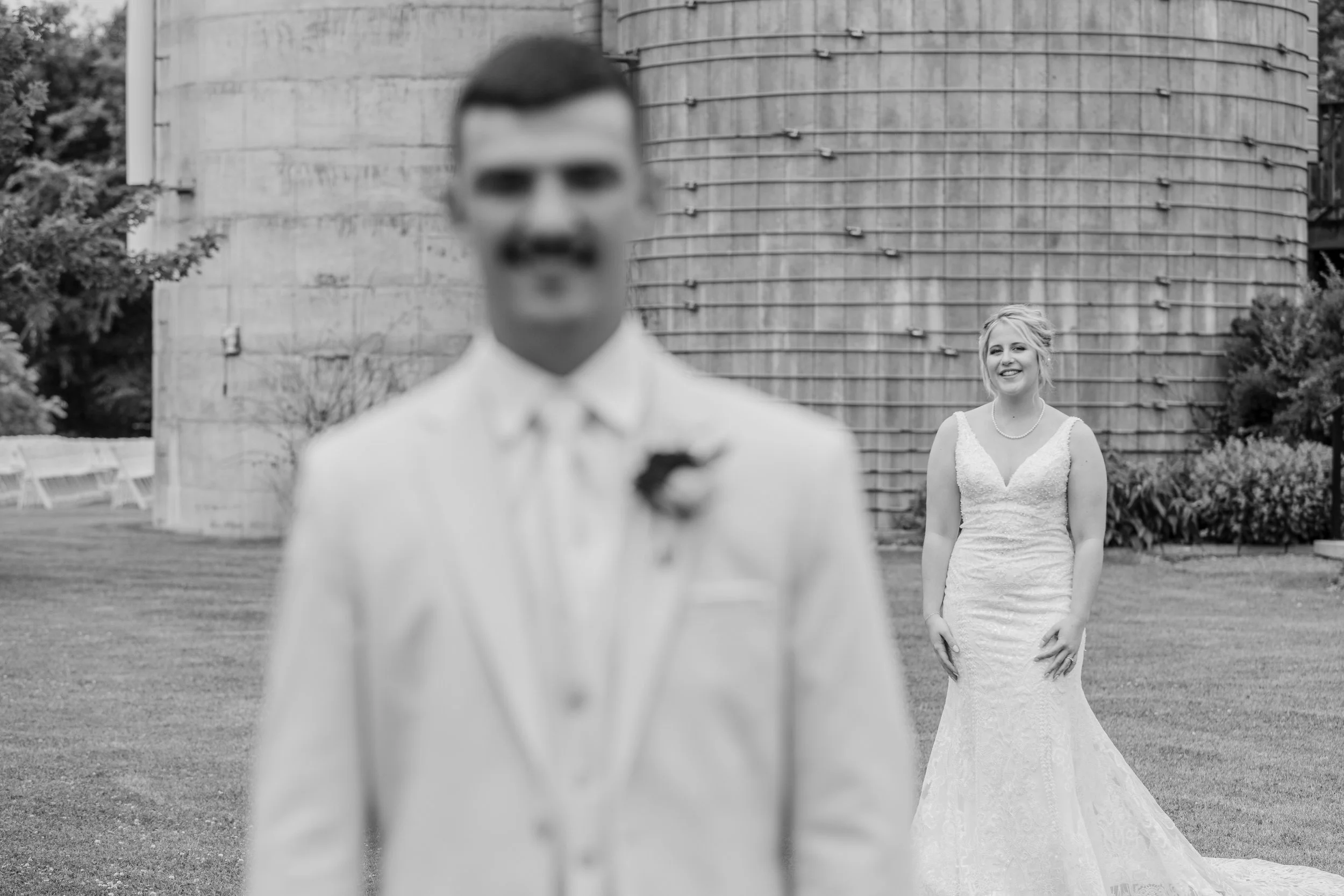
A first look gives you both something that can be surprisingly hard to find on a wedding day: a few quiet minutes together.
Before the ceremony begins, before everyone is asking where you need to be next, and before the day really takes off, you get a chance to see each other, take it all in, calm some nerves, and actually enjoy being together.
And yes, it also means you can stop playing hide-and-seek all morning.
I typically plan 20 to 30 minutes for a first look. The moment itself usually doesn’t take that long, but getting dressed, gathering flowers, coordinating everyone, and getting you both to the right place almost always takes longer than expected. Building in a little extra time means the moment can happen naturally without anyone watching the clock.
One of the biggest advantages of a first look is what it allows us to do afterward.
We can often complete your couple portraits, wedding party photos, and many of your family portraits before the ceremony even begins. That means when the ceremony is over, you’re not disappearing for an hour of photos while your guests enjoy cocktail hour.
Instead, you can actually join them.
Want to Keep Things Traditional?
Absolutely - this is completely acceptable.
A first look isn’t required to have a great photography timeline or beautiful wedding photographs.
If seeing each other for the first time as you walk down the aisle is important to you, keep that moment.
We’ll simply build your timeline differently and reserve more time for couple portraits, wedding party photographs, and family portraits between the ceremony and reception.
There isn’t one “right” way to structure a wedding day. The right timeline is the one that gives you the experience you actually want.
Couple Portraits + Sunset Photos
You don’t need an hour-long portrait session on your wedding day to create beautiful photographs of the two of you.
I typically plan for about 30-45 minutes of couple portraits throughout the day, rather than trying to do everything at once. If you’re doing a first look, we’ll usually create some portraits immediately afterward and work a few more into wedding party photos. Later in the evening, we can sneak away for another 10 to 15 minutes around sunset.
Those sunset portraits often end up being some of my couples’ favorite photographs from the entire day.
And we really don’t need much time.
Give me 10 or 15 minutes, some beautiful light, and the two of you. That’s usually all we need to create something incredible without disappearing from your reception for half an hour.
Sunset isn’t a requirement, either. If the dance floor is packed, you’re having an amazing conversation with someone you rarely see, or there’s a moment happening that you don’t want to leave, we’ll make that decision together.
Use the Wisconsin sunset guide below as a starting point for your wedding-day timeline.
Family Photos
Family portraits are important, but they’re also one of the easiest places for a wedding timeline to fall behind.
For most weddings, I recommend planning approximately 30 minutes for immediate family portraits. If you’d like larger extended-family combinations, adding another 10 to 20 minutes usually gives us the breathing room we need.
Before the wedding, I’ll ask you to create a list of the family combinations that matter most to you. For most couples, 10 to 15 groupings is a great starting point.
A few things make this portion of the day dramatically easier:
• Keep your list focused on the combinations that are genuinely important to you.
• Let everyone involved know before the wedding exactly where they need to be and when.
• Choose a family member or friend who knows the important people and can help us quickly find anyone who wanders away.
• Tell me about any family dynamics, divorces, strained relationships, mobility concerns, or other situations I should be aware of ahead of time.
You shouldn’t have to explain an uncomfortable family situation while everyone is standing there waiting for a photograph.
We’ll talk through everything beforehand so I know who belongs together, who may need a little extra consideration, and how we can make family portraits efficient and comfortable for everyone.
Wedding Party Photos
This is where we get to have some fun.
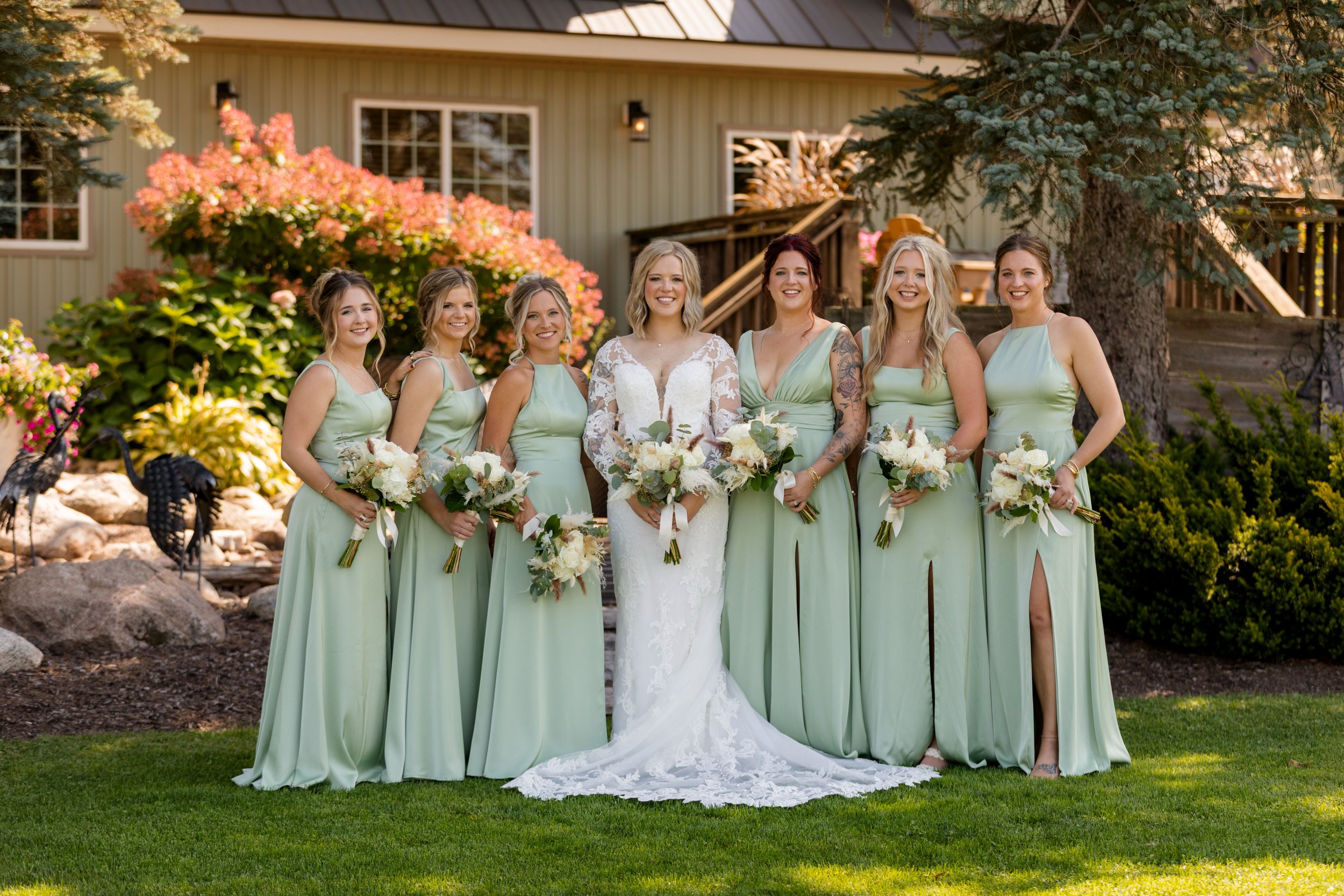
Wedding party photographs don’t have to be 30 minutes of standing shoulder-to-shoulder and smiling at the camera. We’ll create the photographs everyone expects, but we’ll also build in movement, personality, interaction, and candid moments that happen naturally when your closest friends are together.
I typically plan about 30-45 minutes for the wedding party.
That gives us enough time for the traditional photographs, individual sides of the wedding party, the full group, and plenty of room to create something that actually feels like the people you chose to stand beside you.
Ceremony + Reception Coverage
Ceremony
There really isn’t one standard amount of time for a wedding ceremony.
A short outdoor ceremony may last 15 to 20 minutes, while a traditional church ceremony can easily last 45 minutes to an hour or longer for certain religions like Catholic, Hindu, Jewish, or Greek Orthodox weddings.
When I build your photography timeline, I’m looking beyond the ceremony itself. We also need to consider when guests begin arriving, whether you want photographs of the ceremony space before everyone enters, receiving lines or greetings afterward, and how quickly we need to transition into family portraits or travel to the reception.
If your ceremony and reception are at different locations, we’ll also account for realistic travel time plus a little buffer. I never want a 20-minute drive scheduled as exactly 20 minutes. Loading vehicles, traffic, parking, gathering everyone, and simply getting from one place to another all take time.
Reception
Once we get to the reception, the timeline usually becomes much more relaxed.
Photography coverage commonly includes your entrance, dinner, toasts, cake cutting, first dances, parent dances, and the beginning of open dancing.
For most weddings, about an hour of open dance-floor coverage is plenty to tell that part of the story. I’m looking for the energy, the people, the reactions, and all of the ridiculous moments that happen once everyone realizes the formal part of the day is officially over.
You usually don’t need hundreds of photographs of the same people dancing for three hours.
Once I have enough variety to tell that part of your story, you can keep celebrating without feeling like your photographer needs to stay until the final song just because the party is still going.
Where I Focus When Time Gets Tight
When time gets tight, I prioritize people over things.
I often joke that I’m never in the wrong place if I’m with the couple. If I have to choose between photographing a genuine moment happening with you and your guests or stepping away to photograph untouched centerpieces, I’m going to choose the people every time.
The same goes for sunset. If we planned to sneak away for sunset portraits but something meaningful is happening, we can adjust. Your wedding day isn’t a photoshoot with a wedding happening around it. The photographs should tell the story of the day you actually experienced.
That doesn’t mean details aren’t important. If you’ve spent months designing your tables, choosing your stationery, or creating meaningful details that you absolutely want photographed, tell me. We can intentionally build time for those photographs into your timeline or consider adding a second photographer so we can cover more without pulling attention away from the moments happening around you.
Why Buffer Time Matters
You might look at your photography timeline and wonder why I’ve allowed 30 minutes for something that could probably be photographed in 20.
That extra time is intentional.
Buffer time is what keeps a small delay from turning into a stressful afternoon. It gives us room when hair and makeup take a little longer, someone disappears right before family photos, the shuttle is five minutes late, or you simply need a minute to breathe.
And sometimes we don’t need the buffer at all.
That’s even better.
It might mean ten quiet minutes with your wedding party, time to grab a drink, a chance to visit with your grandparents, or a few minutes to stand there and realize, “We’re actually married.”
A great timeline shouldn’t feel like you’re racing from one photograph to the next. It should give you enough structure to keep the day moving while leaving enough space to actually experience it.
What Happens If the Wedding Day Runs Late?
First, don’t panic.
Wedding days rarely run perfectly to the minute, and they don’t need to.
Hair and makeup might take longer than expected. Someone needed for family portraits might be running late. Transportation gets delayed. A button breaks. Someone forgets something at the hotel. It happens.
The good news is that your wedding professionals have worked through shifting timelines before.
Your planner, photographer, videographer, florist, DJ, and other vendors know how to adjust when something changes. Part of my job is recognizing where we can make up time without making you feel rushed or sacrificing the photographs that matter most.
I intentionally build flexibility into portions of the photography timeline, especially wedding party and family portraits. If we need to gain ten or fifteen minutes somewhere, we can often tighten those portions of the day rather than cutting something meaningful.
And if the timeline needs to change completely?
We adjust.
My goal isn’t to make your wedding day follow a spreadsheet perfectly. The timeline is there to serve you, not the other way around. We’ll keep things moving, communicate with your other vendors, make adjustments when we need to, and keep you focused on what you’re actually there to do:
Get married and enjoy the people you invited to celebrate with you.
How I Build Your Wedding Timeline With You
You don’t need to have your entire wedding day figured out before you book me. In fact, helping you build a photography timeline that actually makes sense is part of the experience.
About a month before your wedding, I’ll send you a detailed questionnaire covering everything from family groupings and important details to locations, special moments, and the people who matter most to you.
From there, we’ll work together to finalize your photography timeline. If you have a wedding planner or coordinator, I’m happy to work alongside them so everyone is on the same page. If you don’t have a planner, that’s completely okay too.
The goal isn’t to make your wedding day feel like one long photoshoot. It’s to create enough structure that you can actually enjoy it.
Tell me what matters most to you. Maybe it’s having plenty of candid moments with your favorite people. Maybe you love the details you spent months choosing. Maybe sunset portraits are a priority, or maybe you just want to get onto the dance floor and enjoy the party.
We’ll build the timeline around your priorities, your people, your locations, and the available light so photography fits naturally into the day rather than taking it over.
Sample Wedding Day Timelines
Every wedding is different, but it can help to see what a well-planned day can look like.
The examples below are based around a 4:00 PM ceremony and are meant to be starting points rather than rigid schedules. We'll adjust your final timeline around your ceremony time, locations, season, sunset, travel, family portraits, wedding party, and what matters most to you.
Use these examples to get a feel for the flow, then we’ll build yours together.
Sample 8-Hour Wedding Timeline (with First Look)
12:30 PM – Photographer arrives, details + final touches
1:15 PM – Getting dressed
1:45 PM – First look + couple portraits
2:15 PM – Wedding party photos
2:45 PM – Buffer / travel
3:00 PM – Immediate family photos
4:00 PM – Ceremony
4:45 PM – Cocktail hour candids
5:30 PM – Reception entrance + dinner
6:30 PM – Toasts, first dances, cake cutting
7:15 PM – Sunset portraits
7:30 PM – Open dancing
8:30 PM – Photographer departs
Sample 10-Hour Wedding Timeline (with First Look)
11:00 AM – Photographer arrives, detail photos (dress, rings, shoes, invitations)
11:45 AM – Wedding party gets dressed
12:15 PM – Couple gets dressed, final touches
1:00 PM – First look + couple portraits
1:45 PM – Wedding party photos with the couple
2:30 PM – Buffer/travel to ceremony site
3:00 PM – Immediate family photos
3:30 PM – Couple hides away, guests arrive
4:00 PM – Ceremony
4:45 PM – Extended family photos + cocktail hour candids
5:30 PM – Reception room and detail photos
6:00 PM – Grand entrance + dinner
7:00 PM – Toasts, first dances, cake cutting
7:45 PM – Sunset portraits (adjust by month)
8:00 PM – Open dancing
9:00 PM – Photographer departs
Sample Timeline Without a First Look
1:30 PM – Photographer arrives, details
2:15 PM – Getting ready + final touches, separately
3:00 PM – Separate portraits with wedding party
4:00 PM – Ceremony
4:40 PM – Family photos (have your list ready)
5:10 PM – Full wedding party photos
5:40 PM – Couple portraits
6:00 PM – Join cocktail hour/reception entrance
6:15 PM – Dinner, toasts, dances
Sunset – 10–15 min sunset portraits
8:00 PM – Open dancing
Without a first look, expect to miss most of your cocktail hour.
Sample 6-Hour Wedding Timeline with a First Look
2:00 PM – Photographer arrives, details + final touches
2:45 PM – First look, couple + wedding party photos
3:30 PM – Family photos
4:00 PM – Ceremony
4:45 PM – Cocktail hour candids
5:30 PM – Entrance, dinner, toasts
6:45 PM – First dances + cake
7:15 PM – Sunset portraits + a little dancing
8:00 PM – Photographer departs
Wisconsin Sunset Times by Month
When planning your wedding-day timeline, sunset is one of the most important times to keep in mind, especially if you’re hoping for beautiful outdoor portraits and that soft, golden evening light.
These are approximate sunset times for the Eau Claire and Chippewa Valley area. Golden hour typically begins about an hour before sunset, although the best light can vary depending on the weather, season, and location.
May | 8:15–8:40 PM
Longer evenings give us plenty of flexibility. Sunset portraits can often happen after dinner without pulling you away from the reception for too long.
June | 8:45–8:55 PM
The latest sunsets of the year. There’s usually plenty of daylight through dinner, making this one of the easiest months for fitting sunset portraits into your timeline.
July | 8:30–8:55 PM
Beautiful late-evening light. Sunset portraits often happen after dinner or during the early part of dancing.
August | 7:45–8:30 PM
Sunset starts shifting earlier throughout the month and may fall during dinner, toasts, or the first dances. A little timeline planning goes a long way.
September | 6:55–7:45 PM
The days get noticeably shorter. Depending on your wedding date, sunset may happen during dinner or shortly after the ceremony, so planning portraits around the available light becomes more important.
October | 6:00–6:55 PM
Gorgeous fall color paired with much earlier sunsets. For later October weddings especially, I recommend completing most outdoor portraits before the ceremony whenever possible.
November | 4:30–5:00 PM
Daylight disappears quickly. An earlier ceremony or first look can make a huge difference if outdoor portraits are important to you.
December–February | 4:25–5:40 PM
Winter weddings have some of the shortest photography windows of the year. A first look is strongly recommended so we can complete portraits while there’s still natural light.
A Quick Fall Wedding Tip
Fall color in the Chippewa Valley typically reaches its best color somewhere around late September through mid-October, although every year is a little different.
If you’re planning an October wedding, I strongly recommend building your timeline around daylight rather than waiting until after the ceremony for all of your portraits. A first look and earlier portraits can give you more flexibility, beautiful fall light, and less pressure as sunset approaches.
One final tip: Always check the exact sunset time for your wedding date and location before finalizing your timeline. Even a difference of a week or two can noticeably change how much daylight you have.
Wedding Timeline FAQ
How many hours of wedding photography do I need?
Most couples need 8 to 10 hours. Six hours can work for smaller weddings or when the ceremony and reception are at the same place.
When should the photographer arrive?
About an hour before the dress goes on, or about 90 minutes before the first look.
How long do family photos take?
About 30 minutes for immediate family. Add 10 to 20 minutes for extended family. A written list and a helper who knows everyone make a big difference.
Should we do a first look?
A first look gives you private time together, lets us finish most portraits before the ceremony and means you get to enjoy your cocktail hour. It’s especially helpful for fall and winter weddings in Wisconsin, when it gets dark early.
What time should our ceremony start for sunset photos?
Plan your ceremony about 3 to 4 hours before sunset. That leaves time for photos, dinner and toasts before we slip out for 10 to 15 minutes of sunset portraits.
What if our wedding falls behind schedule?
It happens at most weddings. I build buffer time into family and wedding party photos so we can catch up without losing the moments that matter.
Let’s Plan Your Wedding Day
Every wedding I photograph comes with timeline help: a planning questionnaire, a conversation about your priorities and a final timeline built around what matters most to you.
Planning a wedding in Eau Claire, Chippewa Falls, or anywhere in Wisconsin?
Keep reading for additional resources you may find helpful about the topics discussed above…
Should You Do A First Look on Your Wedding Day?
Explore Related Posts